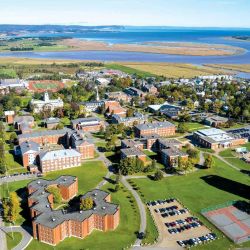
About Acadia School of Music
Music is an important part of student life.
Since 1927 the School of Music provides curricular programming for all Acadia students, encompassing both research-based and performance-based courses as well as ensembles and musical experiences that directly benefit mental health and create a sense of connection across disciplines.
The School of Music offers a comprehensive music curriculum designed to provide a broad based education while enabling students to pursue specific areas of interest. Graduates of this program — performers, creators, researchers, educators, and collaborators — have impacted multiple spaces both within and outside the music industry regionally, nationally, and internationally. We are a powerful public-facing presence within Acadia’s liberal education experience due to our high visibility among the campus and community through our outreach initiatives. Our music students and faculty provide models of leadership, work ethic, and excellence. In the last 25 years, the program has been responsive to evolving industry needs while maintaining a commitment to the goals of:
- Building of healthy communities through our connection to rural and urban contexts, music is a vital language that needs leaders in any community.
- Advancing higher-level music training, producing highly trained music leaders to bring quality musical experiences to their communities.
- Developing critical thinkers who understand how music drives, underpins, and reflects culture, and who are poised to take on leadership roles as culture-makers, influencers, and community developers.